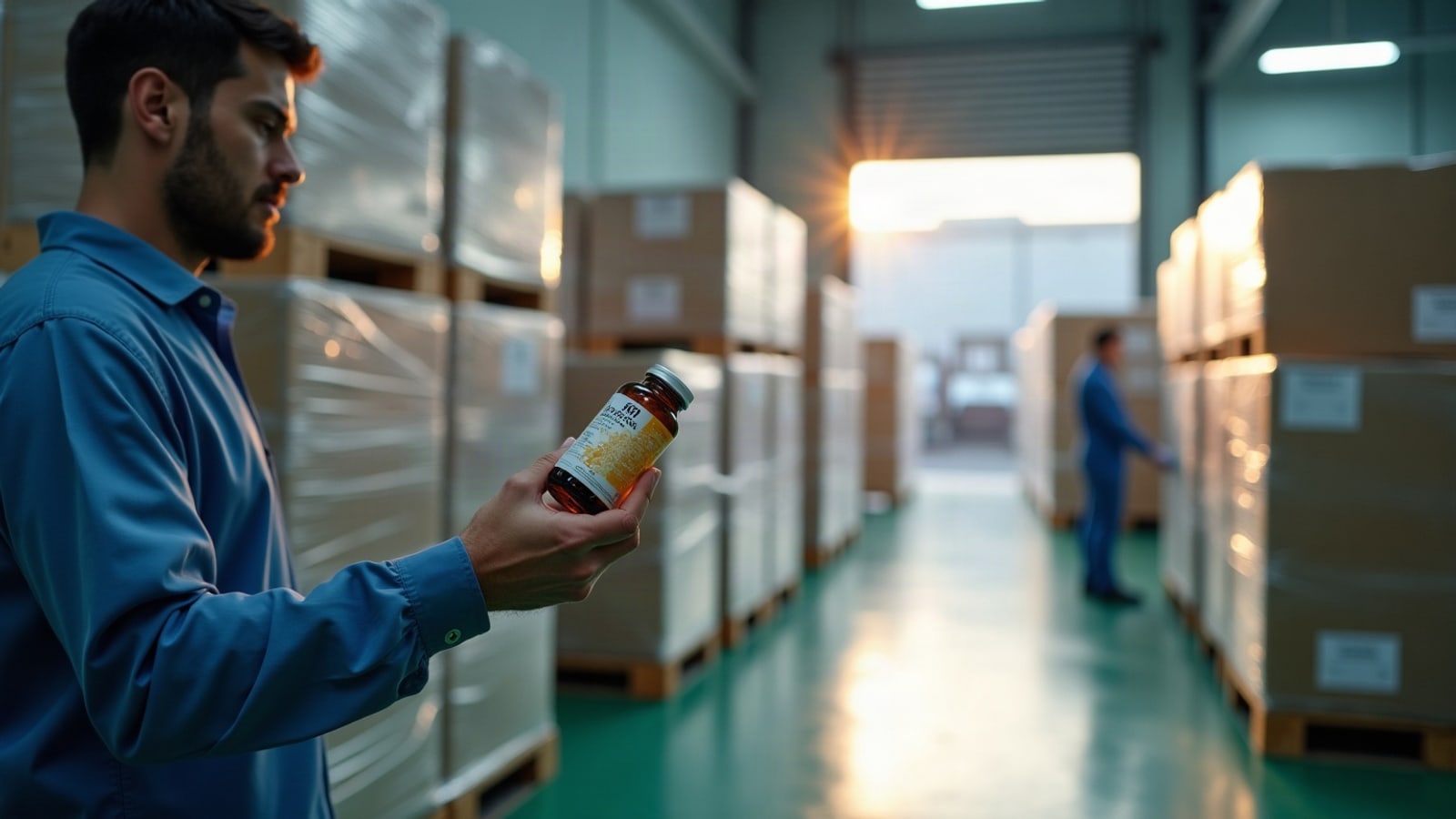

Handing production to a contract manufacturer feels like handing off risk along with it. In practice, FSMA doesn't work that way. The rules governing preventive controls and supplier verification put real, ongoing obligations on the company whose name is on the label, regardless of who runs the equipment. Outsourcing changes who makes the product. It does not change who is accountable for knowing the product is made safely.
The relevant framework sits mainly in 21 CFR Part 117, the preventive controls regulation for human food, which dietary supplement brands and their manufacturers both need to understand even though supplements also carry their own cGMP rule under 21 CFR Part 111. Part 117's supply-chain program requires a receiving facility — often the brand owner, sometimes the manufacturer depending on how the relationship is structured — to approve suppliers based on a hazard analysis, verify that those suppliers are controlling the hazards identified, and keep records showing that verification actually happened. When the manufacturer is located outside the United States, as is common with facilities in Mexico serving the U.S. market, the separate Foreign Supplier Verification Program (FSVP) rule typically applies, and the U.S. importer of record — frequently the brand — is the party FDA holds responsible for that verification.
What verification actually requires
Verification is not a single document; it's an activity, repeated over time, with proof attached. FDA recognizes a few standard ways to satisfy it: reviewing the supplier's relevant food safety or quality records, conducting or commissioning an on-site audit, pulling and testing samples of the finished product, or some combination suited to the risk level of the ingredient or process involved. None of these activities count unless they're documented. An auditor who visited the plant but left no report, or a brand that "knows the manufacturer is good" without a file to show why, has not met the duty — they've just formed an opinion.
The records that do count tend to fall into a few categories: the hazard analysis that justified why this supplier needed verifying in the first place and at what frequency; the approval criteria used before the relationship started; the actual verification evidence — audit reports, certificates of analysis, lab results, or documented record reviews; and, critically, what happened when something didn't check out. A verification program with no corrective action history is often read as a program that hasn't been tested, not a flawless one.
How the duty splits between brand and manufacturer
A competent contract manufacturer carries its own compliance load — current good manufacturing practice records, specifications, batch documentation, environmental and stability data, and its own supplier controls for raw materials. None of that substitutes for the brand's verification file, though the two should line up. A manufacturer's job is to run a controlled process and make records available on request. A brand's job is to have asked for the right records, reviewed them, and kept evidence that the review happened on a defined schedule — not once at onboarding and never again.
A quality agreement is the usual tool for making this split explicit: who audits, how often, who holds the master specification, how deviations or out-of-spec results get communicated, and how long records are retained on each side. Without that document, both parties tend to assume the other is covering a gap that neither actually is.
What a gap looks like in practice
If FDA or a customer ever asks a brand to produce its supplier verification file and the answer is a single audit report from several years ago, that's a gap — not because the manufacturer did anything wrong, but because the brand's own duty to reverify periodically wasn't met. Ingredient changes, new suppliers, facility moves, and recurring minor deviations are all triggers that should prompt a fresh look, and the file should show that the brand noticed and acted.
The practical takeaway for anyone bringing a product to market through a contract manufacturer is to treat supplier verification as a standing function inside the brand's own business, not a line item closed out during supplier selection. Keep the hazard analysis, keep the approval criteria, keep every audit and test result, and keep a record of what happened when something needed fixing. That file is what demonstrates the duty was carried out — and it's the first thing anyone asking hard questions will want to see.