
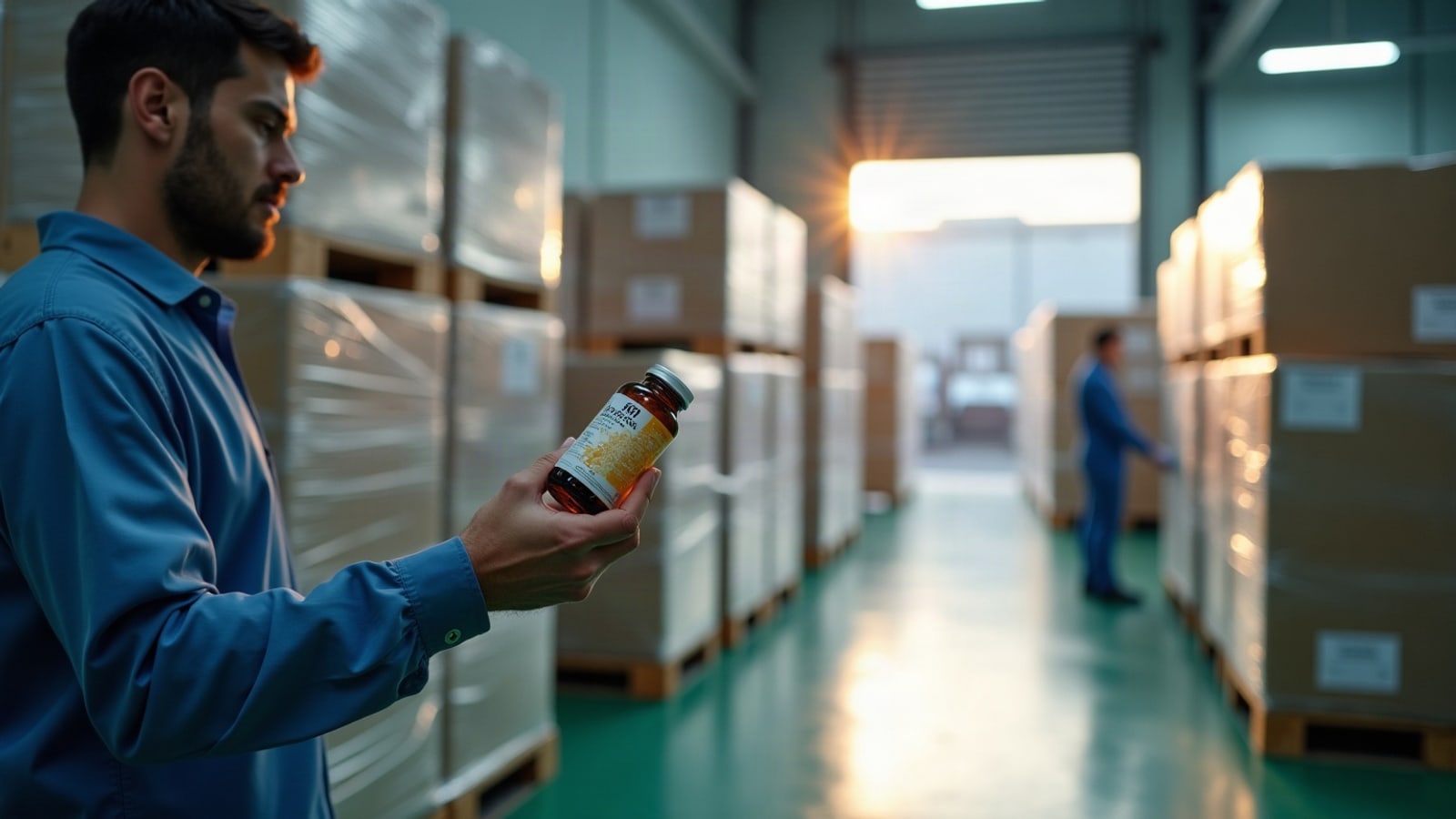
Brand owners often assume that once they sign with a cGMP contract manufacturer, supplement safety compliance becomes someone else's job. Under the framework built by the Food Safety Modernization Act, that's not how the responsibility actually sits. The entity that puts a product into U.S. commerce — usually the brand owner, acting as the importer of record when production happens outside the United States — keeps a specific, documented duty to verify that the ingredients and finished product it's selling are safe. Outsourcing production changes who mixes the powder or fills the capsule. It does not change who owns the paperwork trail proving the supply chain was actually checked.
FSMA's preventive-controls rules require receiving facilities to verify suppliers of ingredients tied to identified hazards. When the supplying facility sits outside the U.S. — a cGMP plant in Mexico, for example — the Foreign Supplier Verification Program puts that verification duty explicitly on the U.S. importer, not on the manufacturer running the equipment. For a brand whose products are made abroad, that means the brand, or whoever is formally listed as importer of record, is the party FDA expects to hold the FSVP file, even though it never touches a single capsule.
What verification actually requires is narrower than it sounds, but it has to be deliberate. A brand approves suppliers based on risk, documents the hazard analysis behind each ingredient, and selects from a short menu of methods to confirm the supplier is controlling that hazard: document review of specifications and certificates of analysis, a periodic onsite audit, product or environmental testing, or review of the supplier's own food-safety records. The right method depends on the hazard's severity — a routine, low-risk vitamin ingredient may only warrant document review, while a botanical with a history of contamination issues may call for testing or an audit. The important part is that the decision itself gets written down, with a rationale, rather than happening casually in someone's head.
The records that actually prove this took place include a written hazard analysis, documentation of the supplier-approval criteria used, records of the verification activities that were actually conducted — audit invoices, lab certificates, dated review notes with a reviewer's name attached — and a schedule for reassessing suppliers whenever something changes, such as a new ingredient origin, a new vendor, or a recall history surfacing somewhere in the supply chain. A single cGMP certificate handed over by the contract manufacturer is not, by itself, an FSVP file. It's one input into a file the brand still has to assemble and maintain.
This is where the duty genuinely splits between brand and manufacturer. A capable contract manufacturer makes verification easier by supplying specifications, certificates of analysis, facility audit summaries, and batch documentation on request. But compiling, dating, and retaining that material into a coherent verification record is the brand's job, not the manufacturer's, because FDA's question during an inspection or import review is addressed to the importer, not to the plant. A manufacturer can hand over good documents. It cannot hand over the brand's legal responsibility to have reviewed and acted on them.
The consequences of a gap are concrete. If FDA requests FSVP records and a brand can't produce them within the required window, or the file shows no real verification activity behind it, products can be refused entry, detained, or the importer can receive a warning letter — independent of whether the contract manufacturer's own facility is clean and well run. Inspectors are trained to tell the difference between "we trust our supplier" and "we can show you why we trust them, and how we checked."
Building this file is lighter than it sounds once it becomes a habit rather than a scramble. A one-page supplier-approval record per ingredient, a running log of verification activities with dates, and a reassessment trigger tied to a calendar date or a specific event — new vendor, new origin, any quality complaint — covers most of what's expected. Keeping that file current, instead of trying to reconstruct it after a form letter arrives from FDA, is what separates a supplement brand that imports with confidence from one that is exposed by a single missing signature.