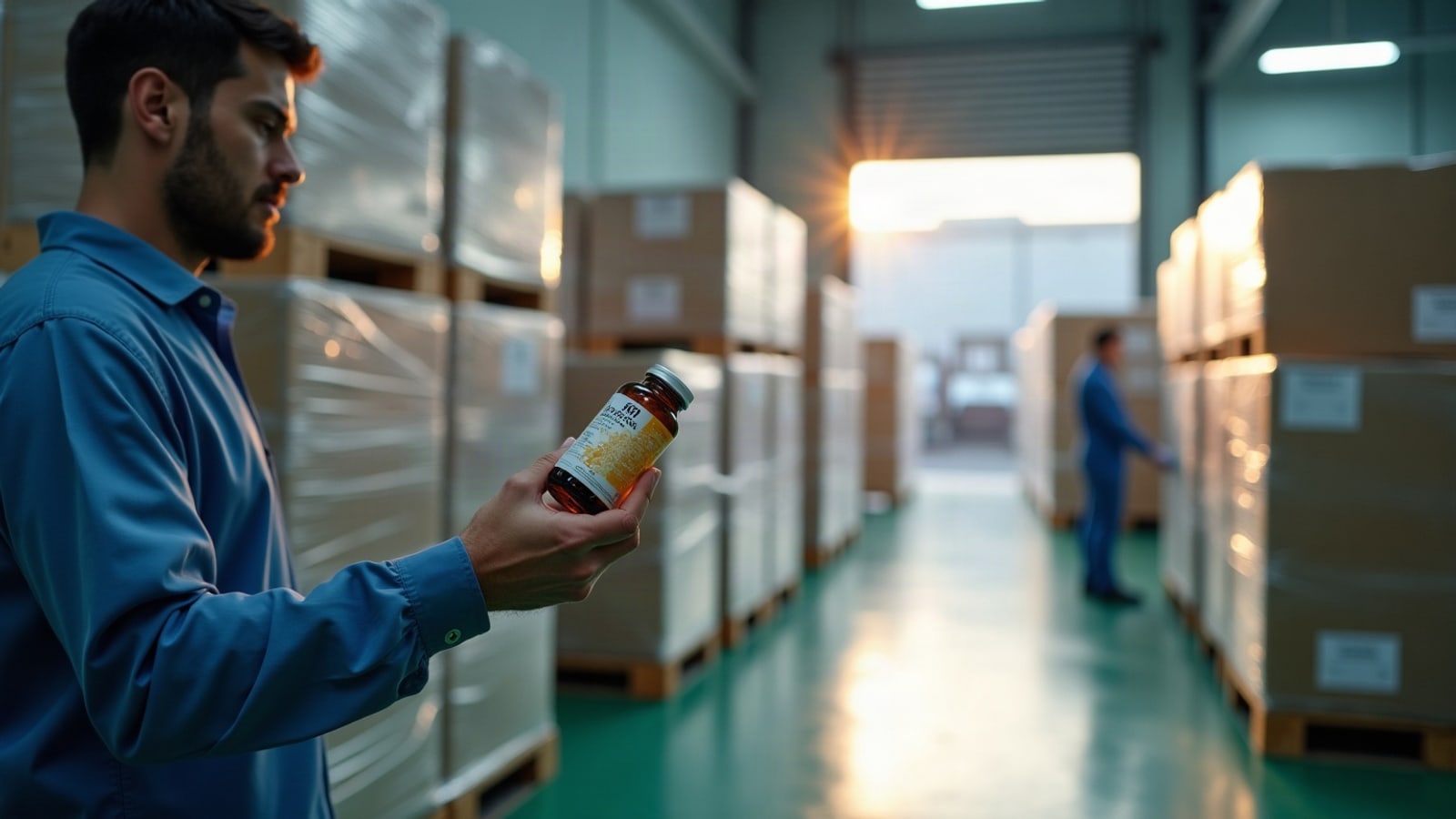

Most brand owners sign with a contract manufacturer and quietly assume the regulatory weight shifts with it. The manufacturer runs the equipment, writes the batch paperwork, handles the floor-level cGMP work — so it feels like their problem now. The law doesn't see it that way. The company whose name sits on the label is the one FDA holds accountable for the finished product's identity, purity, strength, and composition, no matter who physically made it. Outsourcing changes who does the work. It does not change who answers for the result.
Imagine the scenario directly: an FDA investigator reaches out, and it's your office that gets the call, not your manufacturer's. You're the one who has to produce a file showing you did more than pick a vendor and wire a deposit. What's actually in that file matters, because "we trusted our manufacturer" is not a regulatory defense on its own.
The first thing an investigator typically wants is proof that you qualified the supplier before you committed product to them — not just a sales call and a sample, but documentation showing you reviewed their facility registration, asked about their quality systems, and confirmed they could actually produce to the specification you needed. Second comes the specification itself: a written, mutually agreed document describing what the finished product must be — potency ranges, identity testing methods, microbial limits, allergen controls — because without an agreed spec, there's nothing to verify against. Third is evidence of ongoing verification: certificates of analysis you actually reviewed rather than filed unread, periodic audits or questionnaires, and a record of how you responded when something came back out of range. Fourth is your complaint and adverse event handling file, since FDA wants to see that quality issues reported by customers actually reach someone who investigates them, not a folder that never gets reopened.
None of this duplicates what your manufacturer keeps. A competent cGMP facility maintains its own master records, batch records, and internal deviation logs — that's their half of the relationship. Your half is different: proof that you chose them deliberately, agreed on what "acceptable" means in writing, kept checking that the product met it, and acted when it didn't. A written quality or technical agreement between brand and manufacturer is the clearest way to draw that line, because it spells out in advance who tests what, who holds which records, and who notifies whom when a result falls outside spec. Without that agreement, both sides tend to assume the other is covering a gap that neither is actually covering.
When this file doesn't exist, the consequence isn't abstract. A product can be entirely well-made on the manufacturing side and still be treated as adulterated or misbranded from a regulatory standpoint if the brand owner can't show the verification work happened. Observations get written, warning letters get issued, and in more serious cases distribution gets interrupted — not because the product was necessarily unsafe, but because nobody could prove the system around it was under control. Regulators are reading for evidence that the brand took ownership of the outcome, not just the marketing.
The practical fix is simple to describe and easy to put off: build the verification file before you need it, not after an investigator asks for it. Keep the supplier qualification paperwork from day one. Keep the signed specification and every revision to it. Review and file every certificate of analysis instead of treating it as a formality. Put complaint handling on someone's calendar, even if complaints are rare. And put a technical or quality agreement in place with your manufacturer that states, in plain language, who is responsible for which record — because the honest answer to "who's responsible" is almost always both of you, just for different pieces of the same product.
A well-run contract manufacturer will usually welcome this structure rather than resist it. Facilities that take their own cGMP obligations seriously tend to have the documentation to support a brand's verification file already — audit reports, process validation summaries, testing protocols — and sharing them is routine, not an imposition. The partnership works best when both sides understand that supplier verification isn't a formality to get past once; it's a standing duty that outlives the first purchase order, and the paperwork that proves it has to live somewhere the brand owner can reach it.