
Most brand owners have never seen the inside of a laboratory, so the manufacturing process can feel like a black box. It is not. Here are the five stages every product moves through, and what to expect at each one.
The first stage is conceptualization. You arrive with an idea, a target customer, and often a benefit you want to deliver. A good formulation team turns that into something makeable, weighing actives, doses, format, taste, and cost against what the science and the regulations allow. The output is a clear product concept everyone agrees on before money is spent.
The second stage is formulation. This is where the concept becomes a working recipe. The team selects ingredients and forms, balances potency against stability and shelf life, and chooses a delivery format, a capsule, tablet, powder, gummy, stick pack, patch, or liquid, that fits both the actives and the customer's experience. Prototypes are made and refined until the formula performs and holds up.
The third stage is sourcing and verification. Raw materials are procured and their identity and quality confirmed before anything goes into production. Skipping or rushing this step is where quality problems begin, which is why reputable manufacturers treat incoming-material testing as non-negotiable.
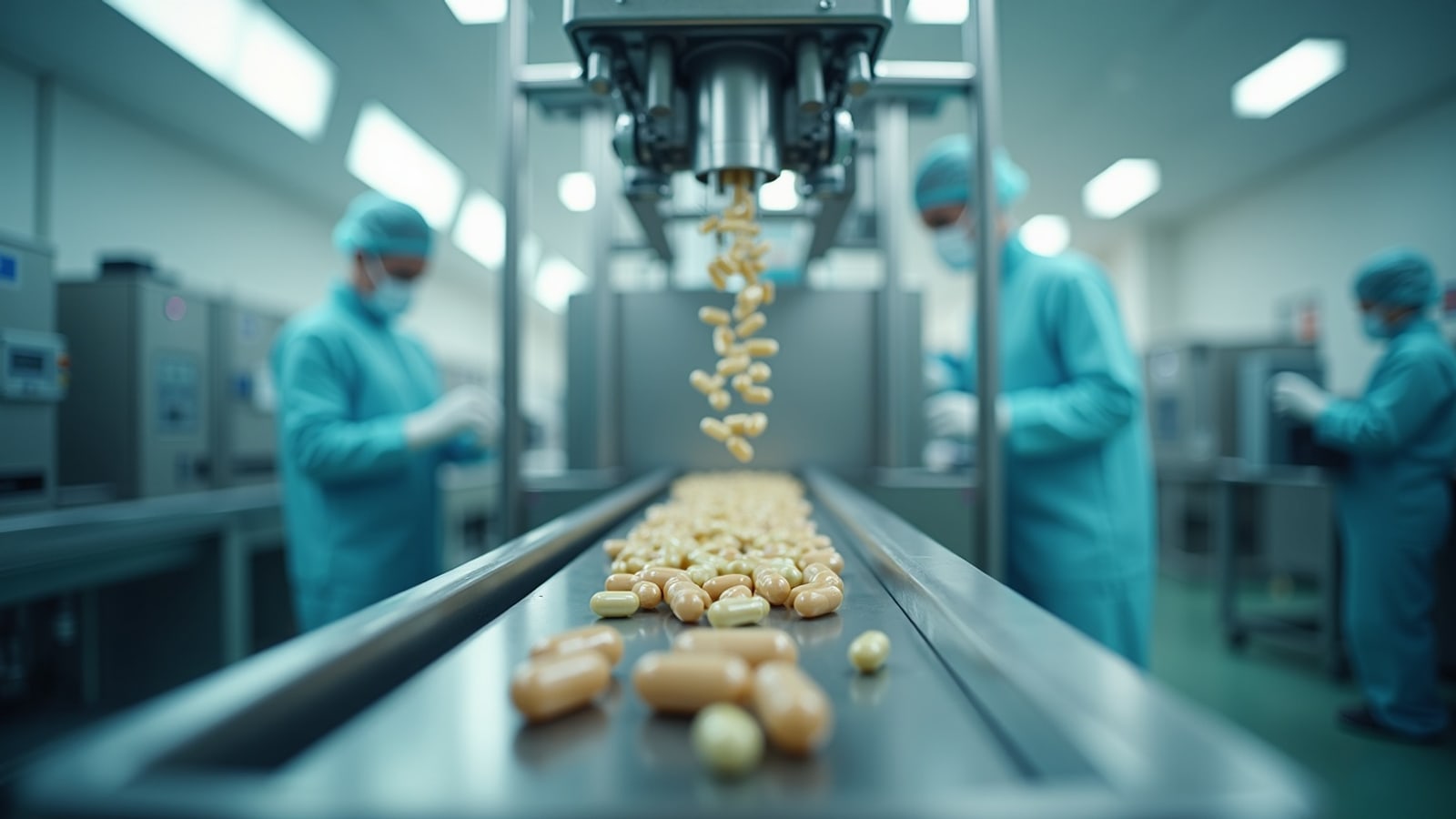
The fourth stage is production. The verified materials are blended and turned into the finished dosage form under controlled, documented conditions, then the product is packaged, whether that is bottling and capping, filling stick packs, or applying patches to backing. Working under cGMP means each batch is made the same way and the records exist to prove it.
The fifth stage is fulfillment. Finished, labeled product is prepared for shipping and sent where it needs to go, to your warehouse, a retailer, or a fulfillment center. A manufacturer that handles this last mile spares you the handoffs between vendors that so often cause delays.
The reason to understand these stages is simple: when one partner owns the whole path, from the first conversation to the shipped box, you get fewer surprises, clearer accountability, and a product that reflects what you set out to build.