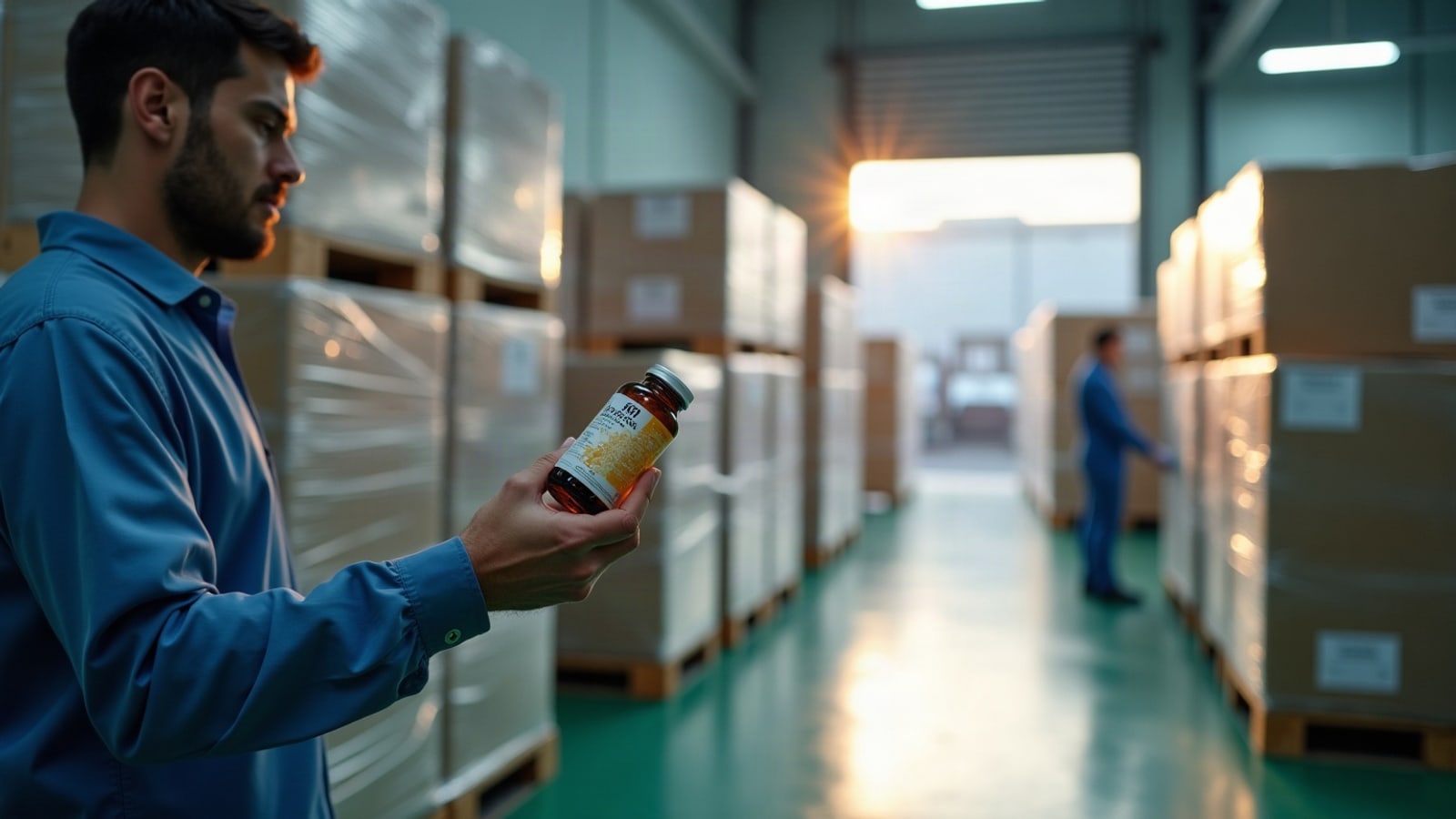

Many brand owners assume that once a contract manufacturer takes over production, the manufacturer also inherits all of the regulatory burden that comes with sourcing ingredients and making a finished product. That assumption is only partly true. Under the Food Safety Modernization Act, the company that imports a food or dietary ingredient into the United States — not necessarily the company that physically makes the capsule, gummy, or powder — carries the Foreign Supplier Verification Program obligation. If your contract manufacturer sits in Mexico and ships finished goods or bulk product across the border, the US-based brand is very often the importer of record, and the importer is the party FDA holds accountable for verifying that foreign suppliers are producing safely and in line with applicable US requirements.
That duty does not mean the brand has to personally inspect every raw material supplier or run its own residual solvent testing. FSMA is built around a risk-based system where verification activities — audits, sampling and testing, review of the supplier's own food safety records — can be performed by various parties, including the contract manufacturer, a qualified third party, or the supplier itself. What the brand cannot outsource is the responsibility for deciding that verification happened, documenting why the chosen verification method was appropriate for the hazard involved, and keeping the resulting records on file. In other words, the manufacturer can do the work, but the brand still has to own the paper trail and be able to produce it on request.
In practice, this plays out as a division of labor that should be spelled out in a quality or supply agreement rather than assumed. The manufacturer is typically best positioned to generate the technical evidence: certificates of analysis, incoming raw material test results, supplier audit reports, and records showing its own hazard analysis and preventive controls under 21 CFR Part 117 or the dietary supplement cGMP rule in Part 111. The brand's job is to collect that evidence, review it critically rather than file it unread, confirm it actually corresponds to the ingredient lots used in its product, and retain it in a form that ties back to its own written hazard analysis. A supplier verification file that consists of unopened PDFs from a manufacturer, with no brand-side review or sign-off, will not hold up well if FDA asks who determined that the verification activity matched the risk.
The records that demonstrate this duty was actually met generally include a documented hazard analysis for each ingredient or supplier relationship, a rationale for the verification method chosen — more frequent testing or on-site audits for higher-risk inputs, lighter-touch document review for low-risk, well-established suppliers — and evidence that verification was repeated or refreshed over time rather than performed once at onboarding and forgotten. A supplier approved three years ago under one set of conditions should be periodically reassessed, especially if there has been a change in sourcing country, formulation, or a prior compliance issue. Where this gets specifically relevant for brands working with a Mexico-based CDMO is that cross-border movement of ingredients or finished product puts the FSVP obligation squarely in play, even though the facility itself may also be FDA-registered and operating under cGMP. Facility registration and cGMP compliance address how safely and consistently the product is made; FSVP addresses whether the US company bringing that product into the country verified its foreign supply chain before relying on it. These are related but legally distinct obligations, and satisfying one does not automatically satisfy the other. The practical takeaway for a brand owner is to treat supplier verification as a standing function of the business, not a one-time step completed during manufacturer selection. That means designating someone internally — even if it is one person at a small brand — who is responsible for requesting, reviewing, and filing verification records, and who understands enough about the ingredients involved to recognize when a document looks incomplete or inconsistent. A good contract manufacturer will make this easier by providing documentation proactively and answering questions about its own supplier qualification process, but the regulatory responsibility for verifying the chain, and for being able to produce evidence of it, sits with the company whose name is on the import paperwork.