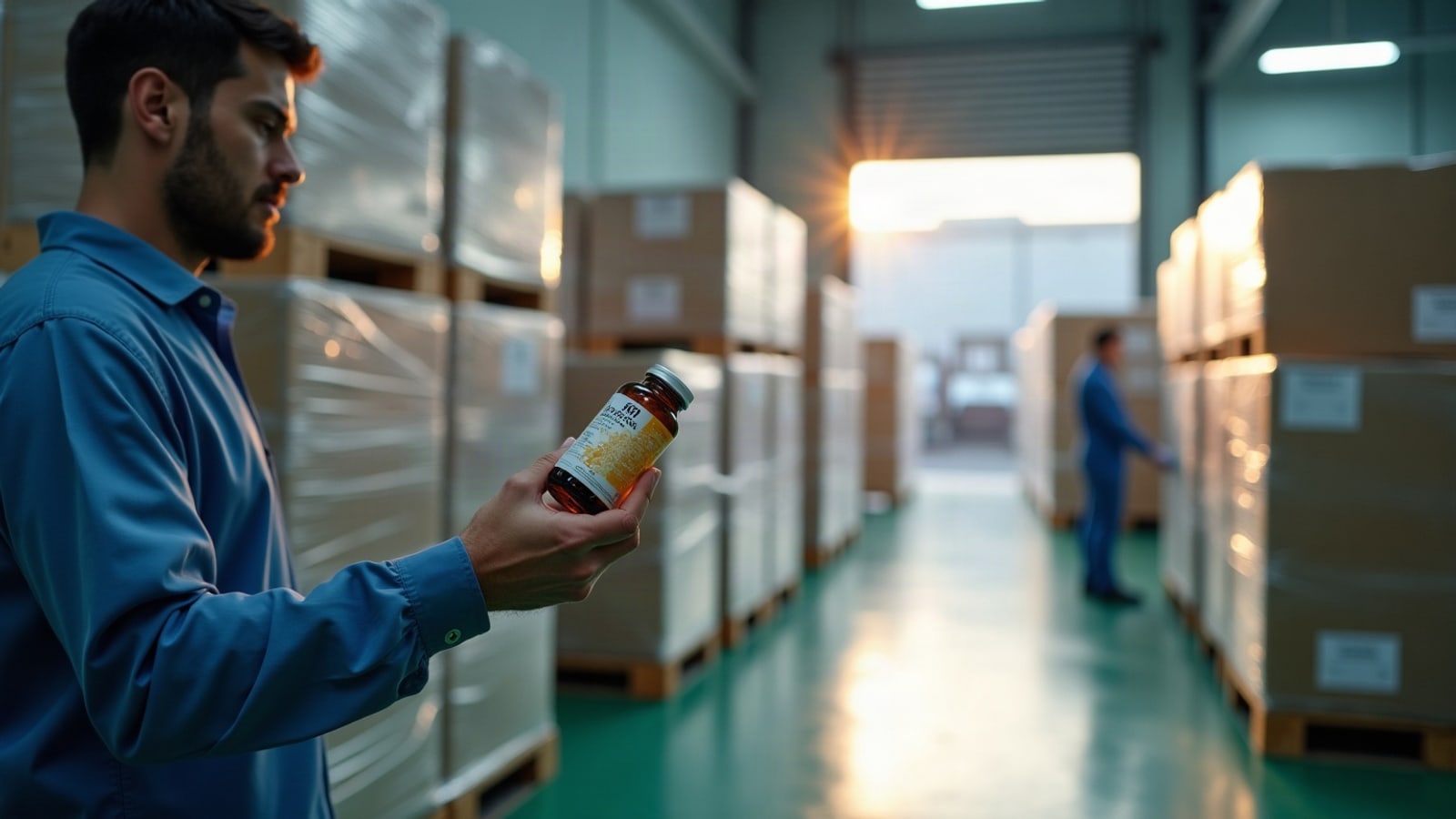

When a brand owner signs a manufacturing agreement with a contract manufacturer, it's tempting to think the compliance burden moves with the product. It doesn't. Under FSMA, the party that brings food — including most dietary supplements — into the United States from a foreign supplier carries a specific, named obligation called the Foreign Supplier Verification Program, or FSVP. If your contract manufacturer sits in Hermosillo and your finished goods cross into Nogales, someone in your supply chain is the "FSVP importer," and that role comes with duties that don't disappear just because someone else runs the encapsulation line.
The FSVP importer is usually the U.S. owner or consignee of the product at the time it enters the country. In practice, that's often the brand owner, though in some arrangements a customs broker or another named entity can take on the role if everyone agrees in writing and the paperwork reflects it clearly. Whoever holds that role has to do four things: conduct a hazard analysis appropriate to the product, evaluate the foreign supplier's food-safety performance and the risk the ingredient or finished product poses, determine and carry out verification activities proportional to that risk, and keep records showing all of it actually happened. Skipping any one of these is treated as a gap in the whole program, not a minor omission.
What verification actually looks like depends on the risk. For a straightforward capsule product using well-characterized ingredients from a manufacturer with a clean compliance history, reviewing the supplier's food-safety or quality records, their COFEPRIS sanitary registration, and routine certificates of analysis may be sufficient. For higher-risk situations — a new ingredient, a hazard like heavy metals or microbial contamination that's harder to control, or a supplier without an established track record — FDA expects more active verification: periodic on-site audits, confirmatory sampling and testing of the product itself, or a documented review of the supplier's own hazard analysis and preventive controls. The point isn't to pick the cheapest option on a checklist; it's to match the depth of verification to the actual risk the product carries.
The records that prove this happened are what an investigator will ask for first, long before they ask about your marketing claims. That file typically includes the written hazard analysis for each ingredient or product, documentation of the supplier's regulatory status (FDA facility registration, relevant COFEPRIS registration, prior audit or certification reports), the specific verification activity performed and its results, and any corrective action taken when something didn't check out. If your file has a contract and a certificate of analysis but nothing showing why that level of verification was judged sufficient, you have a presentation problem, not a safety problem — but to an inspector, those look the same.
This is also where the relationship between brand and manufacturer genuinely becomes shared work, even though the legal duty doesn't split evenly. A reputable contract manufacturer should be willing and able to produce the documentation that makes your verification activity possible: facility registration numbers, relevant sanitary registrations, batch-level certificates of analysis, written responses to audit questionnaires, and access for an on-site or remote audit if your risk assessment calls for one. What they generally can't do is perform the verification for you or stand in as the FSVP importer unless that's been formally arranged and documented. The brand owner who treats the manufacturer's cooperation as the entire verification program, without ever writing down why that was deemed adequate, is the one who gets flagged.
Reassessment is the part brand owners most often let lapse. FSVP isn't a one-time file you build at onboarding and forget. Supplier performance, ingredient risk, and even regulatory status can change, and the expectation is that importers revisit their hazard analysis and verification activities on a reasonable schedule, and sooner if something goes wrong — a recall, a failed test, a change in the supplier's process or ownership. A verification file that was excellent three years ago and hasn't been touched since reads, to an inspector, like a file that was never really being used.
None of this requires a brand owner to become a food-safety scientist. It does require treating supplier verification as an owned, documented, ongoing function rather than something that gets handled implicitly by having a good contract manufacturer. The manufacturer's registrations, certifications, and cooperation are the raw material for your verification program. The hazard analysis, the risk-based decision about what kind of verification is enough, and the records proving it was done — that part stays with you.