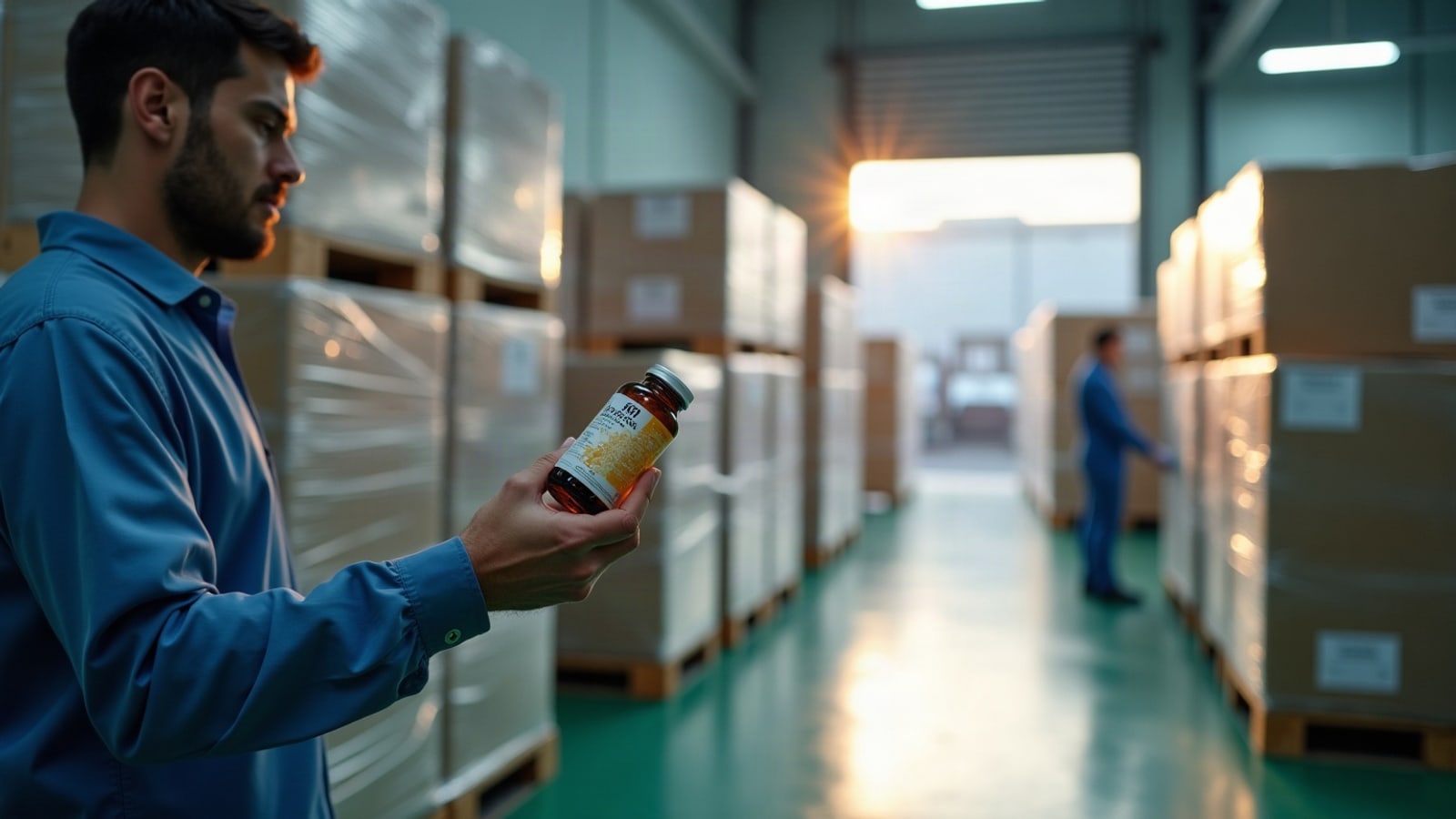

When a brand owner signs a manufacturing agreement with a contract manufacturer, it's tempting to think the compliance burden transfers along with the production line. It doesn't. Under the Food Safety Modernization Act (FSMA), the party that puts its name on the label, and in many cases the party that imports ingredients or finished goods, retains specific legal duties around supplier verification. Those duties don't disappear because someone else is mixing, encapsulating, or bottling the product. They just change shape — from hands-on production control to documented oversight.
The core idea behind supplier verification is simple: whoever is accountable for a finished product has to be able to show, with records, that they took reasonable steps to confirm their suppliers and manufacturing partners are capable of meeting safety and quality requirements. For dietary supplement brands, this plays out on two overlapping tracks. One is the general FSMA expectation that companies in the supply chain identify hazards and verify that the parties upstream of them are controlling those hazards. The other is the dietary supplement cGMP framework (21 CFR Part 111), which independently requires verification of the identity, purity, strength, and composition of every component that goes into a finished product, regardless of who manufactures it.
In practice, this means a brand owner cannot simply hand a formula to a manufacturer and walk away. At minimum, a defensible file should include a documented basis for approving each supplier — not just a signed agreement, but evidence that someone evaluated the supplier's food-safety or quality history, facility registration status, and relevant certifications before ingredients started flowing. It should include a hazard assessment, even a simple one, for the ingredients and processes involved, since verification activities are supposed to be proportionate to the risk identified. And it should include records of ongoing verification: certificates of analysis reviewed against specifications, periodic audits or questionnaires, and a record of what happens when a result falls outside spec.
This is also where the division of labor with a contract manufacturer matters. A cGMP-compliant facility will generate its own incoming-material testing records, supplier qualification files, and certificates of analysis as part of its own Part 111 obligations. A brand owner can and should request copies or summaries of that documentation, but requesting it is not the same as having a program. FDA does not expect a brand to re-test every raw material itself; it does expect the brand to be able to explain, in writing, how it knows its manufacturer and that manufacturer's suppliers are doing what they claim. A folder of unopened certificates of analysis that nobody reviewed is not verification. A documented process for who reviews them, how often, and what triggers escalation is.
The gap most brands fall into isn't a lack of effort — it's a lack of a system. Verification activities happen informally: an email exchange here, a phone call there, a one-time facility tour years ago. None of it is wrong, but none of it is retrievable when an investigator or a retail partner's compliance team asks for proof. The fix isn't necessarily more work; it's organizing what already happens into a file that can answer three questions on demand: who approved this supplier and on what basis, what ongoing verification has occurred since, and what happened the last time something didn't match specification. It's also worth noting that supplier verification is not a one-time project that gets completed and shelved. Ingredient sourcing shifts, formulas get updated, and manufacturing partners change their own supply base over time. A verification program that isn't revisited periodically — at least annually, or whenever a supplier or ingredient changes — tends to look, on paper, exactly like one that was never built in the first place.
For brands working with a full-service contract manufacturer, the practical path is collaborative rather than adversarial: ask early in the relationship what documentation the manufacturer already generates, build the brand's own file around reviewing and retaining that documentation, and put in writing who is responsible for each verification step. That clarity protects both parties and, more importantly, it's the thing that actually satisfies the regulation — not the manufacturing agreement itself, but the evidence that verification happened and keeps happening.