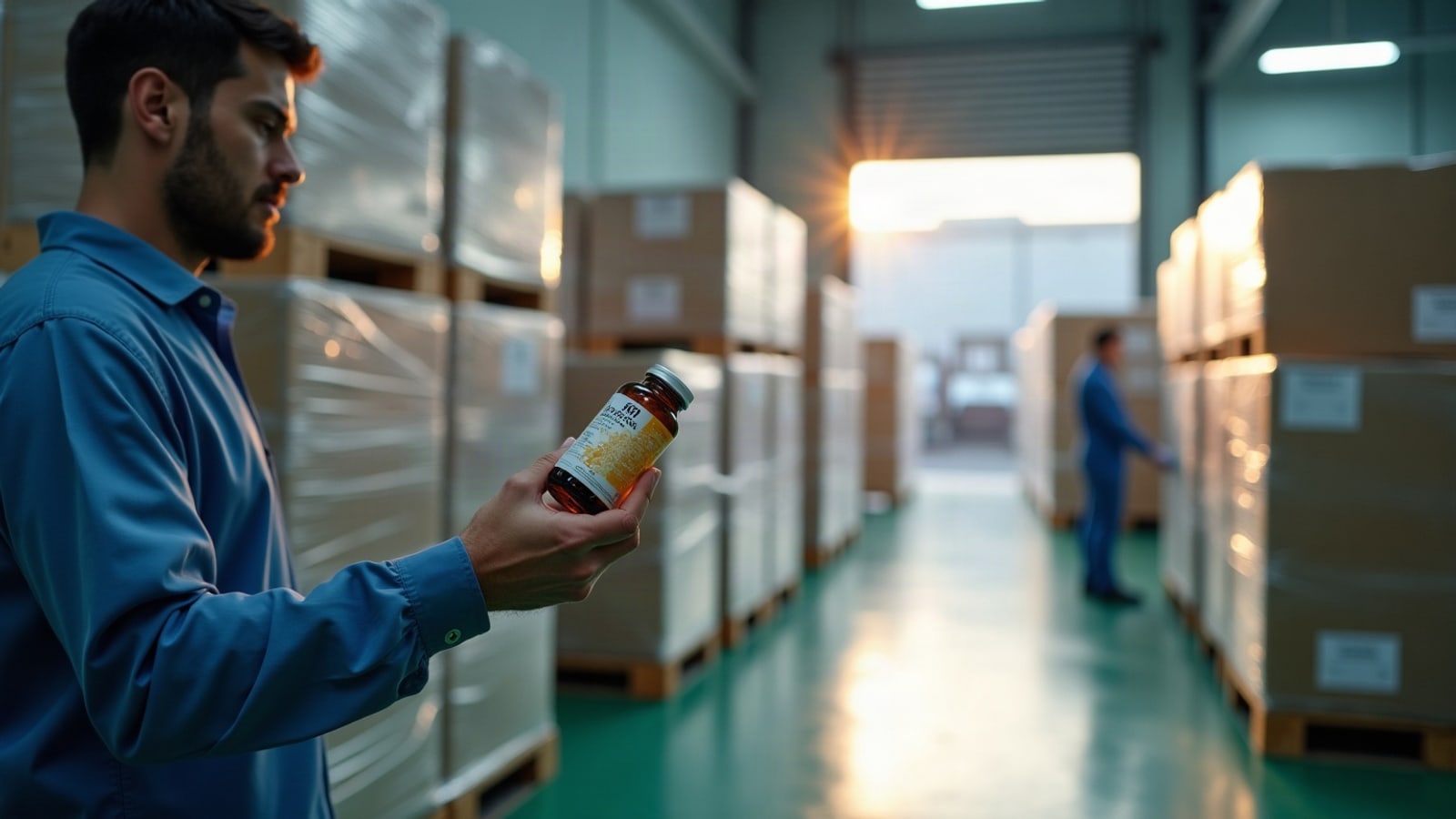

Bringing a supplement to market through a contract manufacturer feels, at first, like handing off a burden. The formulation work, the sourcing of raw materials, the pressing or encapsulation, the labeling line — all of it moves to someone else's facility. What doesn't move, at least not entirely, is the brand owner's legal responsibility for knowing what's actually in the product and where it came from. FSMA-era expectations around supplier verification, layered on top of the existing dietary supplement cGMP framework under 21 CFR Part 111, assume that someone in the supply chain is actively confirming that ingredients are what they claim to be — and that the person who put their name on the label can show how that confirmation happened.
The confusion usually starts with a misunderstanding of what 'supplier verification' actually covers. It is not a single certificate or a one-time audit. It's an ongoing obligation to establish that a raw material supplier is reliably delivering an ingredient that matches its specification — identity, strength, purity, composition, and freedom from contamination — and to have a documented basis for trusting that. For a brand owner, this duty doesn't vanish because a manufacturer is running the qualification testing. It shifts into a shared arrangement, and the brand still needs visibility into how that arrangement works.
In practice, a brand owner remains on the hook for a few specific things. First, choosing a manufacturer with a real, functioning supplier-qualification program — not just a claim that one exists. Second, understanding, at least at a summary level, how that manufacturer verifies the raw material suppliers feeding into your specific formula: certificates of analysis, identity testing, periodic audits, or approved-supplier lists that get reviewed rather than treated as permanent. Third, keeping your own records of that oversight — the agreements, the specifications you approved, and any documentation the manufacturer provides showing verification activity took place. If a regulator or a retail partner asks a brand owner to prove due diligence, 'my manufacturer handles that' is not a complete answer. 'Here is our supplier agreement, here is the specification we set, and here is the verification documentation we receive and review' is.
The records that actually demonstrate this duty was met tend to be unglamorous. They include approved supplier lists with review dates, incoming component specifications tied to your formula, certificates of analysis matched against those specifications, any identity-testing results for botanicals or other ingredients prone to substitution, and a record of what happens when a component fails to meet spec — was it rejected, was the supplier requalified, was the brand notified. A gap in any of these isn't necessarily a sign of bad manufacturing; it's a sign that the paper trail proving good manufacturing doesn't exist yet, which functionally looks the same to an inspector or an auditor.
The division of labor with a manufacturer usually looks like this: the manufacturer runs the physical verification — testing incoming materials, maintaining supplier qualification files, monitoring performance over time — because they are the party actually receiving and handling the raw materials. The brand owner's job is oversight and documentation of that oversight: reviewing supplier programs before signing on, asking for evidence periodically rather than assuming silence means compliance, and keeping their own file so the two records line up if either party is ever asked to produce them. A brand that never asks and never keeps its own copy is trusting a system it cannot independently prove worked.
This matters most in two moments. The first is a quality event — a contamination issue, a potency complaint, an adulteration finding somewhere in the supply chain — when regulators and retailers will ask both the manufacturer and the brand what verification steps were in place before the product shipped. The second is a routine inspection or a retailer's compliance audit, where the request is simply for the paperwork, not an explanation after the fact. Brands that have never asked their manufacturer for this documentation, and manufacturers that can't produce it quickly, both create the same outcome: a finding that looks like negligence even when the underlying materials were fine.
The practical takeaway for a brand owner evaluating or working with a contract manufacturer is to treat supplier verification as a topic worth asking about directly, not as background noise handled somewhere upstream. Ask how raw material suppliers are qualified and requalified. Ask what documentation is available on request. Ask what happens when a component fails testing. And keep a file of the answers, because the responsibility for knowing didn't leave with the production line — it just changed shape.